
Last updated November 25, 2026
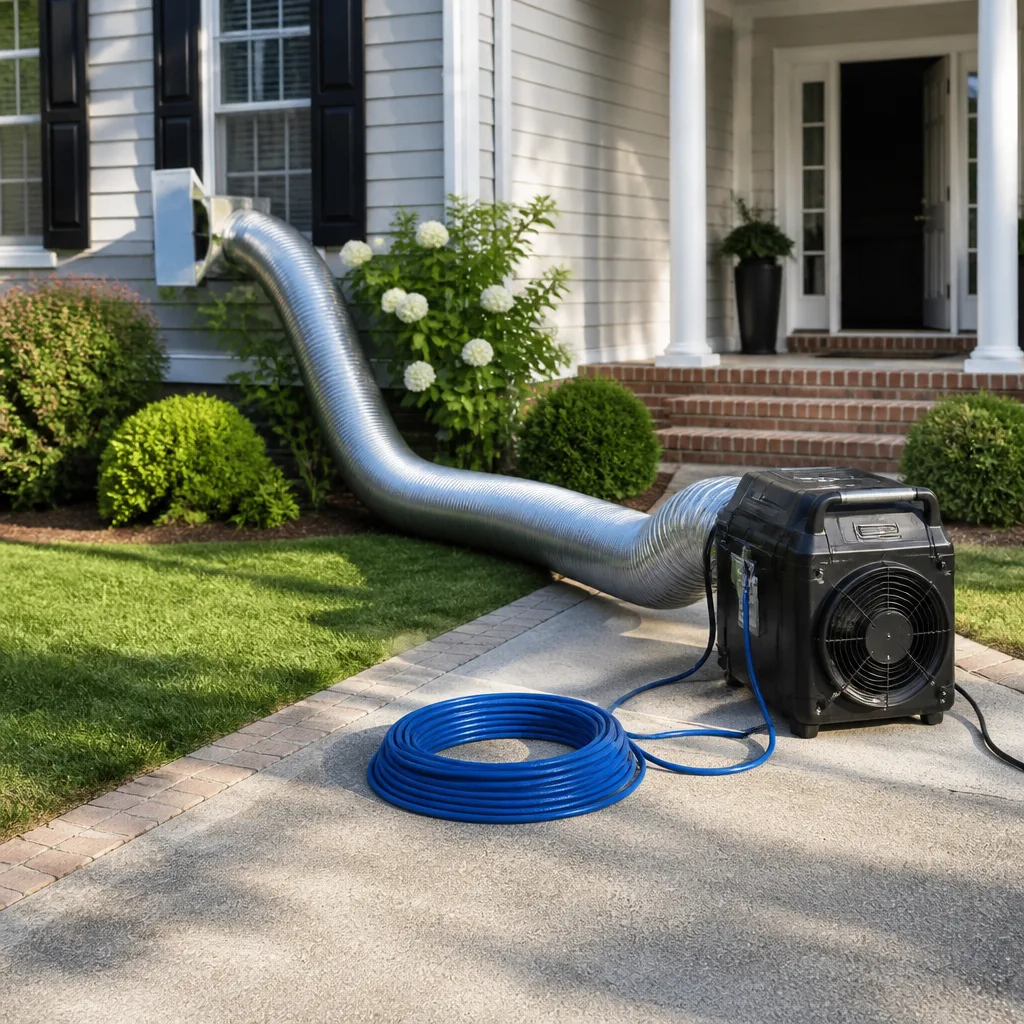 Whole-home duct cleaning
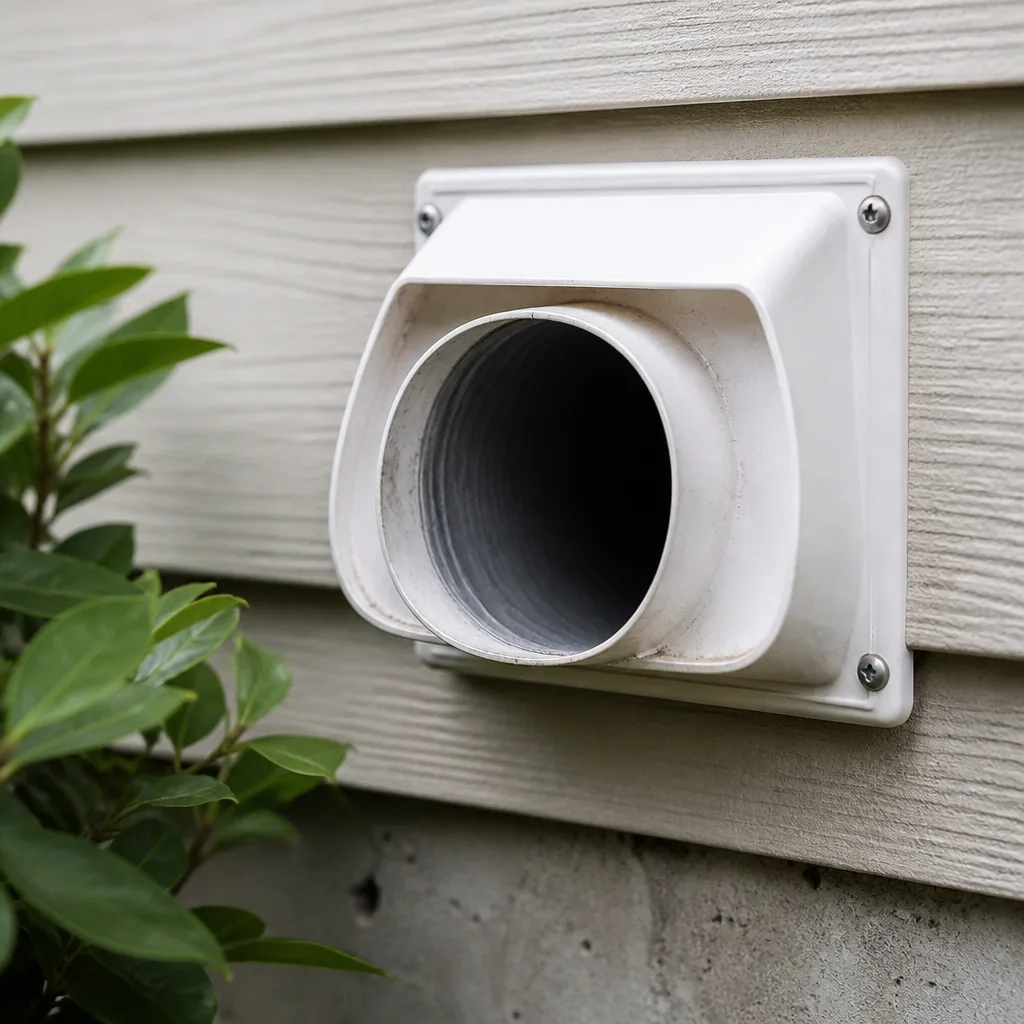 Dryer vent cleaning
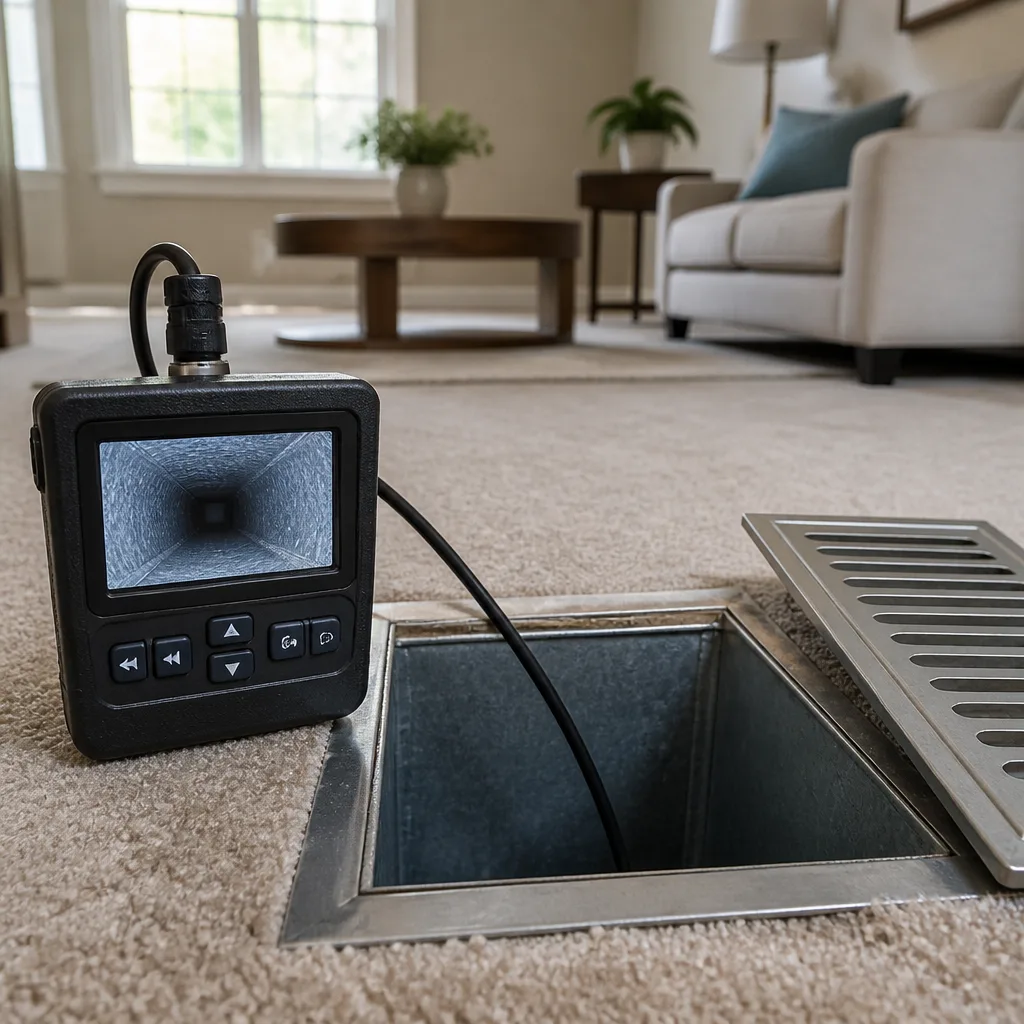 Camera inspection
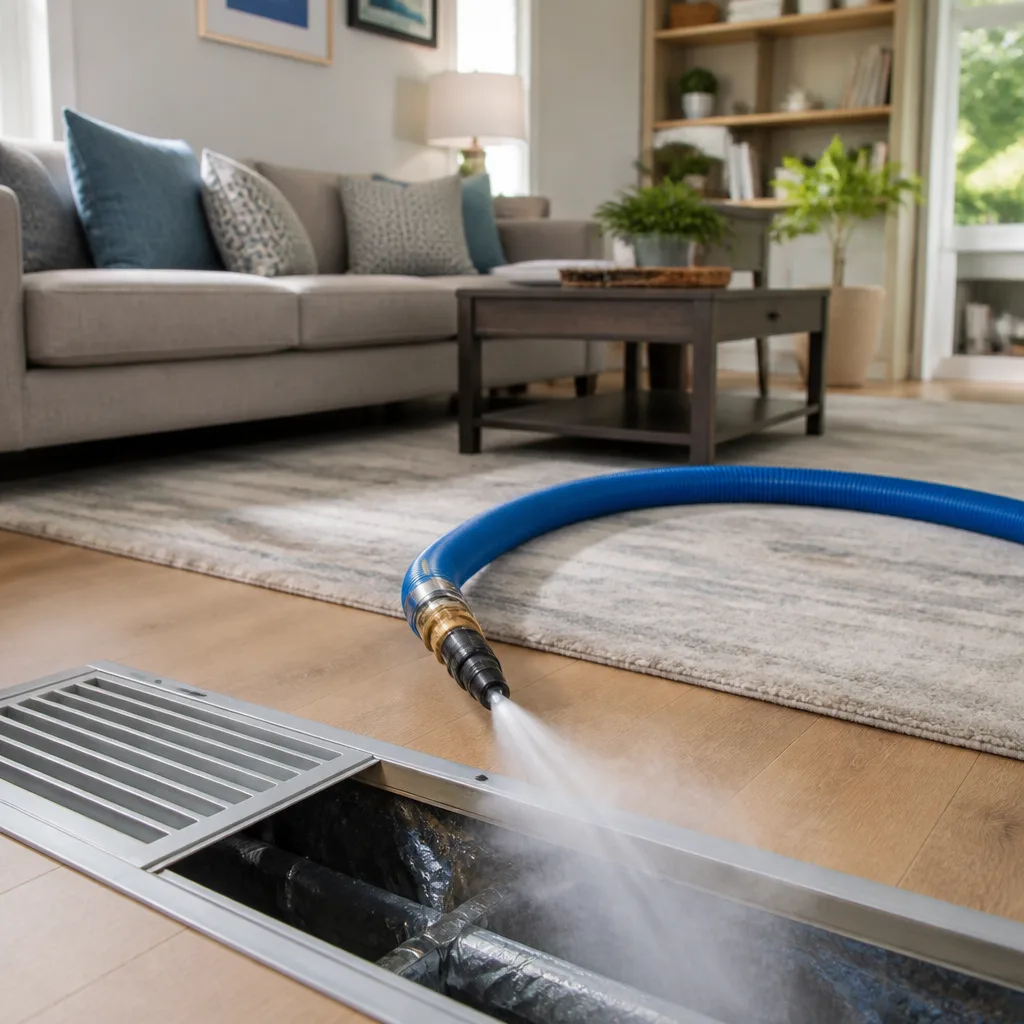 Sanitizing & deodorizing
Whole-system duct and dryer vent check with before-and-after photos - you see exactly what came out of your vents
That "$99 whole-house special" is a bait ad - the real number appears once they are in your hallway, or the "clean" is a shop-vac at the register. We photograph the inside of your ducts before and after instead.
Air Duct Cleaning Maintenance Checklist for Lafayette Homeowners
Change your filter every 90 days. You’ve read that on a dozen sites, and it’s wrong for Lafayette. During our spring wind season, a MERV-8 filter can load up in under 30 days, and a clogged filter does more than cut airflow. It creates a pressure differential across the filter frame, and that gap pulls unfiltered air around the filter and straight into your duct system. The filter looks dirty; the ducts behind it are getting the bypass. What follows is a checklist built around what actually degrades ductwork here: wind season, summer smoke, fall debris, winter static, and the era your house was built.
Quick Answer
A workable air duct maintenance checklist for Lafayette ties each task to the season and to your home’s construction era rather than to a generic calendar. At minimum it should cover filter swaps timed to spring wind and summer smoke, visual inspection at registers and return grilles, and logging your cleaning interval by HVAC run hours instead of months. Professional duct cleaning then follows those logged hours and the inspection findings, not a fixed schedule.
Styles & brands we work with
- Whole-home duct cleaning
- Dryer vent cleaning
- Camera inspection
- Sanitizing & deodorizing
Table of Contents
- Why a Lafayette Duct Checklist Shouldn’t Be Generic
- Month-by-Month Duct Maintenance in Lafayette
- Choosing a Filter: MERV Ratings and Your Blower Motor
- Visual Inspection Points You Can Check Without Tools
- Tracking Cleaning Intervals by Run Hours, Not Calendar Time
- Warning Thresholds That Mean Call a Professional
- A Shorter Checklist for Property Managers and Landlords
- Humidity Swings and What They Do to Duct Seams
Why a Lafayette Duct Checklist Shouldn’t Be Generic
Lafayette sits between the Flatirons and the plains, and that position gives it a specific set of stressors. Spring brings sustained wind from the west and northwest, and wind carries fine dust that passes through a filter’s outer layer quickly. Summer brings smoke from regional fires, which is fine particulate that behaves differently than household dust: it loads a filter’s depth rather than its surface. Fall pushes leaf litter and seed debris onto outdoor equipment and can pull it into return paths. Winter is dry, and dry air plus forced heat produces static that makes interior duct surfaces attract and hold everything that passes.
Construction era matters just as much. Homes built in the older core areas of Lafayette, near the historic downtown grid, often have sheet-metal trunk lines with fewer, larger runs. Newer construction on the east side of town tends toward flexible duct, longer runs, and tighter floor plans. Flexible duct has a ribbed interior that traps debris at each corrugation. Sheet metal holds less on smooth surfaces but shows joint leaks more readily. A checklist that ignores this difference ends up asking you to do the wrong task at the wrong time.
The reference point for all of this is your HVAC system’s actual operation, not the paper calendar on your fridge. If you want the full scope of what a service visit covers from the duct opening to the register, our air duct cleaning page lays out the equipment and method.
Month-by-Month Duct Maintenance in Lafayette
This is the working checklist. Treat each month as a checkpoint rather than a rule, and shift a task by a couple of weeks if the weather demands it. Nothing here requires tools.
Spring (March through May)
- Inspect and swap filters at the start of March. Spring wind begins loading filters early. Check the filter at 30 days rather than 90 and note the condition.
- Check return grilles for visible buildup after a wind event. A dusty return grille during high wind is normal. A grille that stays coated two weeks after the wind stops is a signal.
- Walk the exterior around outdoor equipment. Clear seed pods, cottonwood fluff, and grass clippings away from the condenser and any intake path.
Summer (June through August)
- Switch to a filter that handles fine particulate. Smoke season calls for media rather than simple fiberglass. See the filter section below before you buy.
- Check supply registers for uneven airflow. One register pushing noticeably less air than its neighbors suggests a leak or a collapsed section, and that’s a professional call.
- Note any new musty smell near a register. Odor at a register in summer can point to condensation in a duct run or a filter that’s been wet.
Fall (September through November)
- Do a full register and return-grille sweep. Leaves and seed debris get drawn into returns. Vacuum the grille faces with a brush attachment only; don’t push anything into the duct.
- Before first heat, run the system once for ten minutes on a cool morning. A dusty, hot smell on first start is normal. A persistent smell deserves a closer look.
- Log your filter changes since spring. Fall is when the run-hour log tells you whether a cleaning is due.
Winter (December through February)
- Expect static. Dry indoor air makes flex duct interior surfaces hold dust. Low humidity and a filter that looks dark sooner than usual go together.
- Check filter fit. Winter is when gaps at the filter frame become obvious, because the bypass shows up as a dust streak on the blower side. A filter that doesn’t seat snugly is doing partial work.
- Keep an eye on humidifier output if you run one. If you have a whole-home humidifier, winter is when mineral buildup on the pad can release particles into the airstream.
Choosing a Filter: MERV Ratings and Your Blower Motor
The right filter is the highest MERV rating your blower motor can push through without losing airflow, not the highest number on the shelf. A filter that is too restrictive starves the system, raises static pressure, and forces the blower to work harder. A filter that is too loose lets particulate through to the coil and the duct surfaces. Both outcomes shorten equipment life.
Here’s how the range behaves in practice:
- Basic fiberglass (low MERV): Protects the blower and coil from large debris. Very little fine-particle capture. Common in older homes where airflow capacity is limited.
- Pleated media, mid range: A reasonable middle ground for many Lafayette homes. Capture improves without extreme restriction.
- High-MERV media: Strong fine-particle performance, but needs a blower designed to handle the restriction. In homes with flex duct or long runs, high-MERV filters can rob airflow.
- Whole-home filtration equipment: Systems built around Aprilaire or Honeywell filter cabinets and air cleaners are designed to match a specific filter with a specific blower. Use the correct size and rating, not a substitute.
Home age and duct material change the recommendation. Sheet-metal systems with generous trunk lines often tolerate a higher MERV. Long flex runs in newer construction need a filter that doesn’t add much resistance. If your equipment includes Aprilaire or Honeywell filtration, we work with those systems directly, and matching filter type to the cabinet is part of the job. The same static-pressure logic applies to the coil, which is why HVAC cleaning goes alongside duct work rather than after it.
Visual Inspection Points You Can Check Without Tools
You don’t need instruments to catch most duct problems early. You need to know where to look and what “normal” looks like against “off.”
- Lift each supply register and look at the boot. A light film is typical. A thick mat of dust or visible debris pushed to the edges of the boot suggests debris is reaching the register, which means it’s already on the duct surfaces upstream.
- Look at the return grille face. Returns are unfiltered or lightly filtered in many homes. A return that’s uniformly dusty is routine. One that’s clean at the middle and dark at the edges says the airflow is bypassing the filter at the frame.
- Check the filter frame for gaps. Remove the filter and look at the slot it sits in. If you can see daylight around the filter when it’s installed, unfiltered air is getting past it.
- Look for dust streaks near the blower access panel. A streak pattern points to a leak at a joint.
- Smell each room near a register. Persistent musty or stale odor at one register and not others is a localized issue.
- Look at the exterior termination points. For a dryer vent, confirm the exterior flap opens and closes fully and isn’t packed with lint; that’s the most direct safety check a homeowner can do.
None of this involves tools, and none of it requires opening the air handler. Those steps stay in the hands of a technician.
Tracking Cleaning Intervals by Run Hours, Not Calendar Time
A calendar-based interval is a rough proxy. The number that actually matters is how many hours your system has moved air since the last cleaning, because that’s when loading happens. In Lafayette, a home with heavy run hours during a smoky summer can accumulate as much loading as a home running intermittently for two years.
The log is simple:
- Column 1: Date.
- Column 2: Filter change (yes/no) and filter type.
- Column 3: Estimated run hours since last entry. You can read this from a smart thermostat if you have one, or estimate from your heating and cooling season usage.
- Column 4: Any inspection note (unusual register dust, new odor, uneven flow).
- Column 5: Your last professional cleaning date.
Then read it against conditions. A spring with sustained wind and a summer with regional smoke compresses the interval. A mild year where you ran the system lightly stretches it. The log tells you which kind of year you just had. When the log shows rising dust at registers, uneven airflow notes stacking up, or a filter that keeps loading faster than it used to, you have a documented reason to inspect the system instead of guessing.
Think of the log as an intake history for your home’s air. If you have whole-home filtration from Aprilaire or Honeywell, log those filter changes too, since media filters in those systems run on the same hour count.
Warning Thresholds That Mean Call a Professional
Some maintenance is homeowner work. Some needs training, correct equipment, and containment. The thresholds below are where inspection stops and diagnosis begins.
- Persistent odor at a register. A smell that doesn’t clear with a filter change suggests moisture or biological growth in the duct system. That needs assessment, not a plug-in air freshener.
- Visible debris at the register face. If you can see debris at a supply register, the upstream duct run is loaded. Duct cleaning with a proper contact-vacuum system is the job.
- Uneven airflow between rooms. A room that’s always colder or hotter, or a register that barely pushes, can mean a leak, a disconnected section, or a collapsed flex run. Those are repair items.
- Dust returning within days of a cleanup. If you clean a register and it’s dusty again within a week, something upstream is shedding or a joint is leaking.
- A dryer that takes longer than it used to. A dryer vent packed with lint is a fire-safety concern and needs clearing. We address that as a named specialty because the risk is real, and the fix is a proper extraction, not a shop vac at the exterior flap.
- Any evidence of moisture on duct surfaces or the coil. Moisture and airflow don’t mix. This is a stop-and-call condition.
We say “call a professional” here for a reason. Ducts are enclosed, and opening a system to inspect interior surfaces without containment spreads what you find. Our technicians work with Abatement Technologies negative-air machines to keep debris and contaminants contained during the work, the same remediation-grade standard used on mold and contaminant projects.
A Shorter Checklist for Property Managers and Landlords
Rental properties need a documented version of the same checklist. The difference is that the reader isn’t the person running the system, so the tasks need to be written down, filed, and repeatable across units.
- Log filter changes per unit by date and filter type. A tenant who changes a filter isn’t enough; you need the record.
- Inspect registers at turnover. Every move-out inspection should include a visual check of supply and return grilles and the filter frame.
- Note dryer vent condition on the same turnover sheet. Dryer vent cleaning belongs on the same documented schedule, given the fire-safety profile.
- Keep the run-hour log alongside maintenance records. A tenant-reported “filter clogs fast” issue is easier to resolve with history behind it.
- Record which units have whole-home filtration (Aprilaire, Honeywell) and the correct filter part number. Substituting filters in the wrong cabinet costs airflow and tenant comfort.
If you’re managing multiple units and want a consistent set of service records, our Lafayette Air Duct Cleaning Pros team can provide documentation for each visit, so the file follows the unit rather than the tenant.
Humidity Swings and What They Do to Duct Seams
Humidity swings are the quiet stressor. Lafayette’s dry winters and wetter late-spring periods cause duct materials to expand and contract, and joints to move. Seams that were snug can develop small gaps over time. Small gaps don’t look like much, but they do two things: they leak conditioned air into unconditioned space, and they pull unfiltered air in from wherever they sit. A gap in a duct running through an attic or a crawlspace draws air from that space, not your living room.
This is why Duct Repair & Sealing is a core service for us rather than an afterthought. A cleaning without sealing leaves the leak that reintroduces the problem. In our experience, cleaning and sealing in the same visit is cleaner for the air than scheduling a second contractor to come back.
The checklist version of this is simple: if you’ve noticed that registers near a duct run show dust faster than others, and the pattern is consistent season to season, suspect a seam. That’s a “call for assessment” item, not a DIY fix, because sealing duct joints correctly requires the right sealant, access, and containment.
Common Mistakes to Avoid
- Stuffing the highest-MERV filter you can find into an older system. High MERV without matching blower capacity starves airflow and can shorten blower life.
- Cleaning a register and calling the duct clean. A clean register face hides what’s upstream. The interior of the duct if where loading happens.
- Skipping the filter frame when you change the filter. A filter that doesn’t seat lets unfiltered air around it, which defeats the purpose.
- Using a shop vac at a register. A household vac can’t create enough vacuum to pull what’s settled in a duct run, and it can push dust deeper.
- Treating dryer vent cleaning as a convenience. A packed vent is a fire-safety exposure. Check it as part of the same checklist.
- Ignoring a persistent musty smell because it’s not “bad enough yet.” Odor is the earliest symptom of a moisture problem.
- Following a 90-day filter rule through a windy spring or smoky summer. Check the filter at 30 days during wind season and after heavy smoke.
See the difference
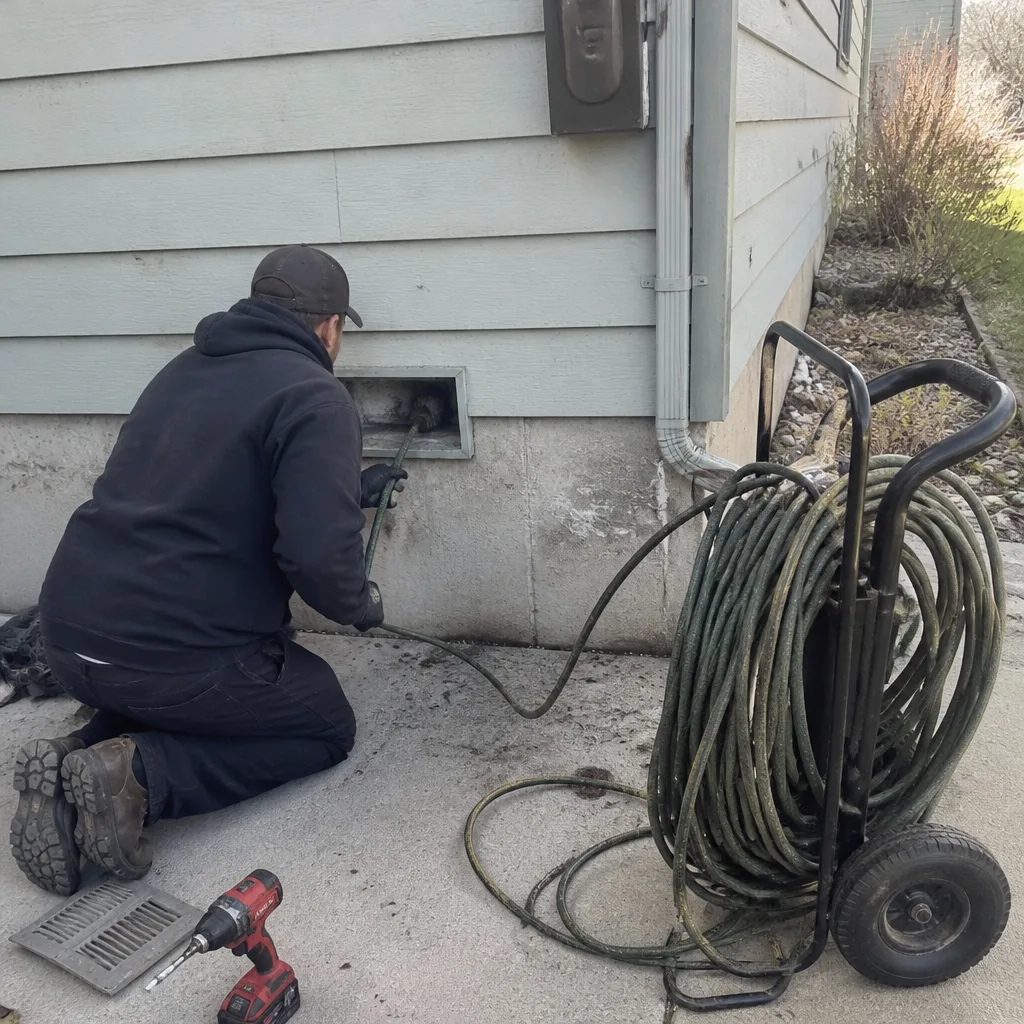 Before
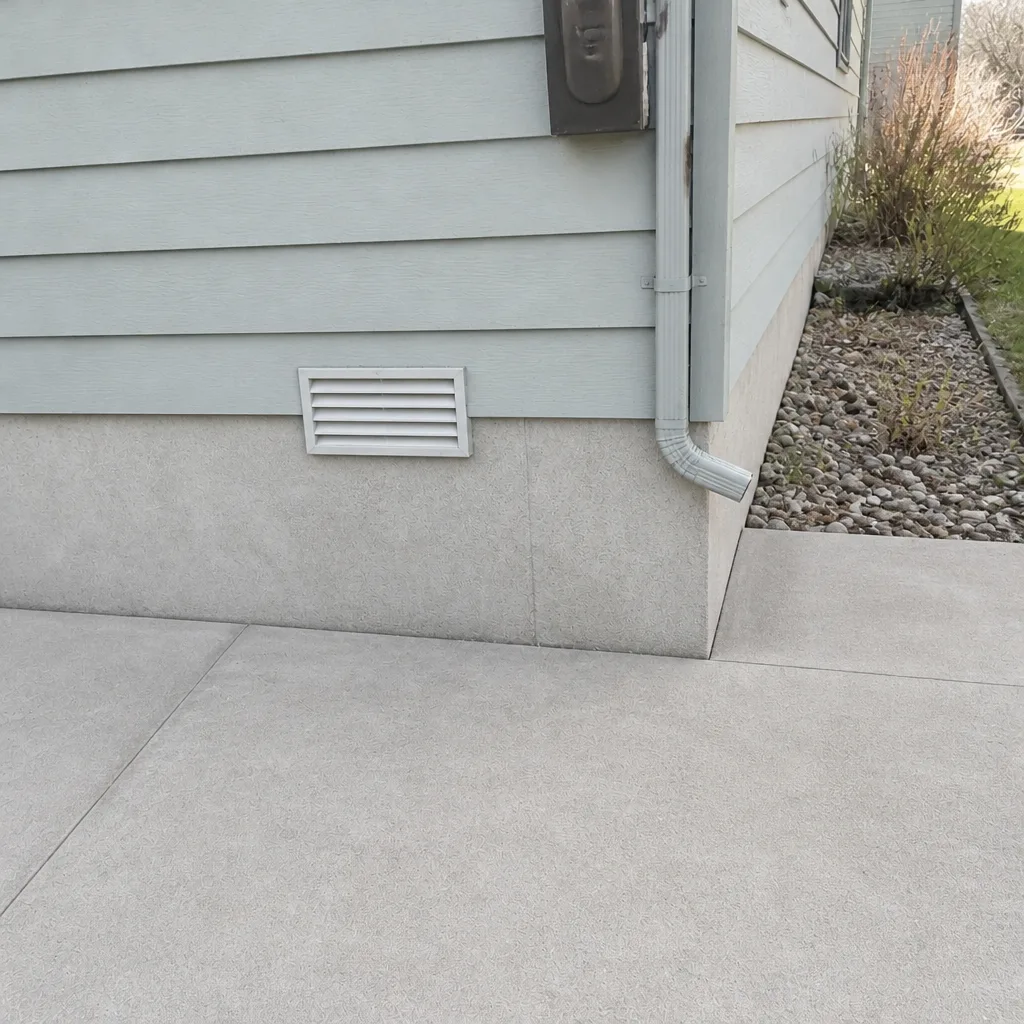 After
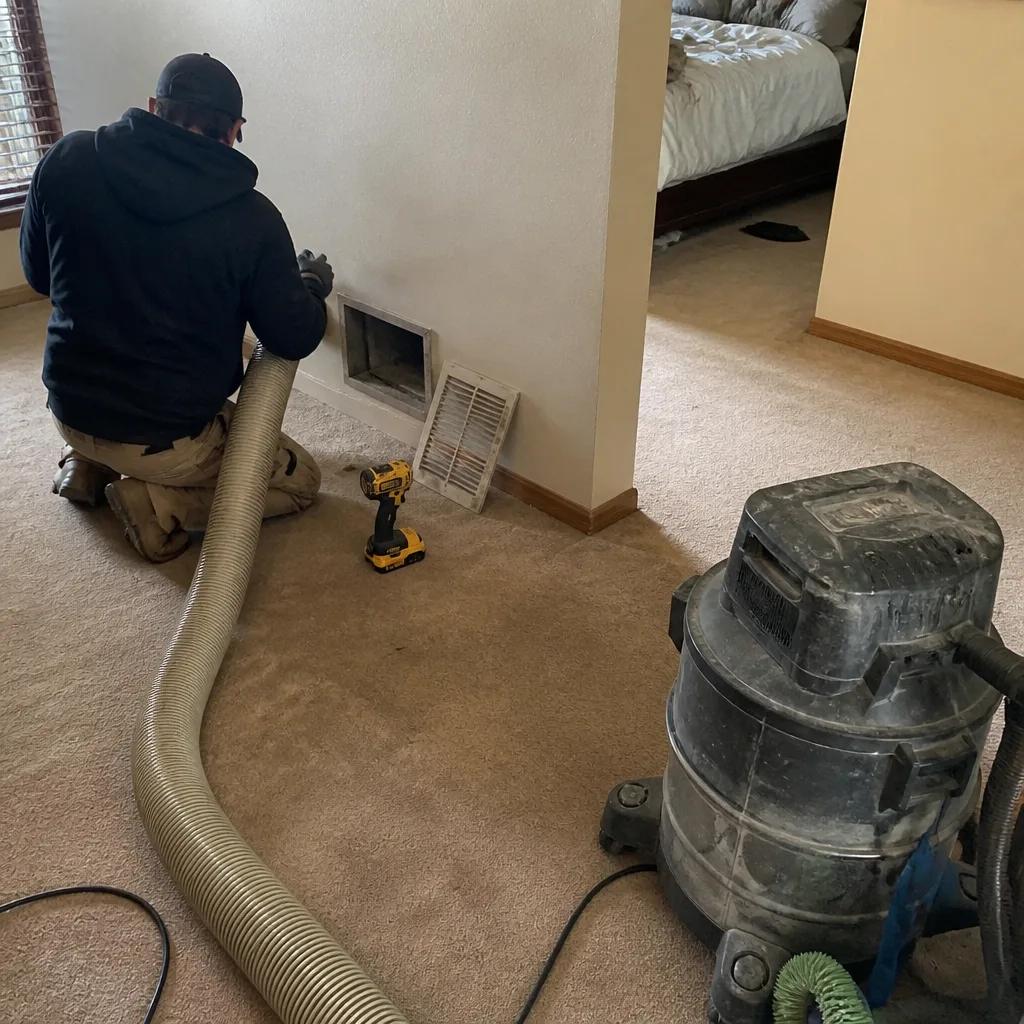 Before
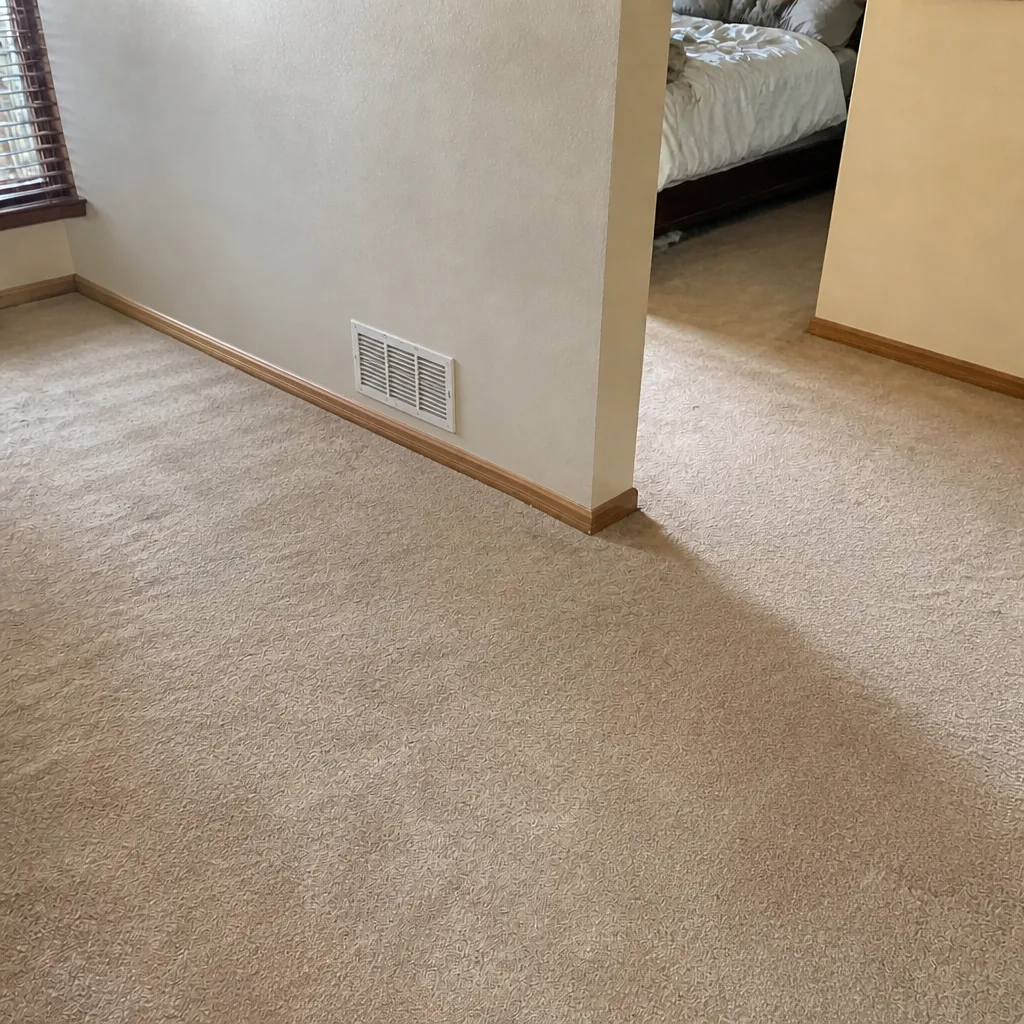 After
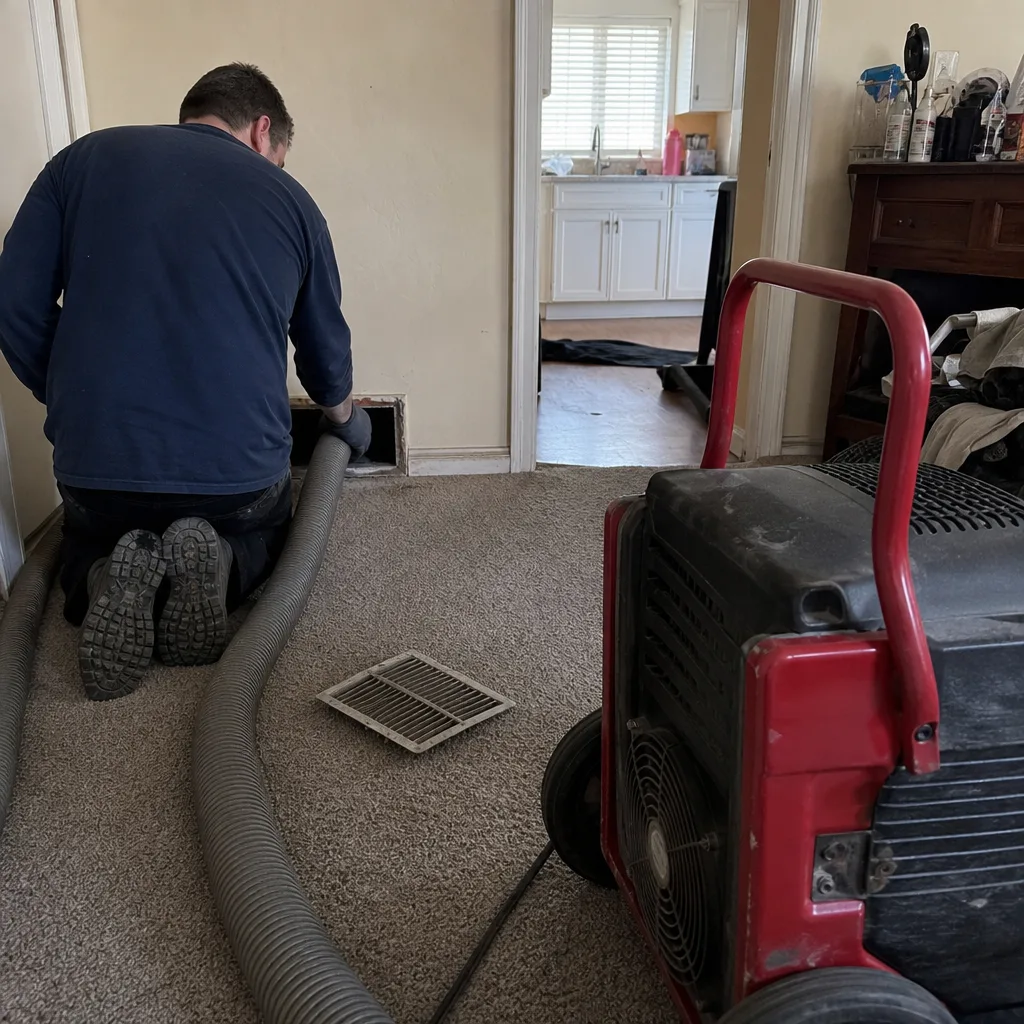 Before
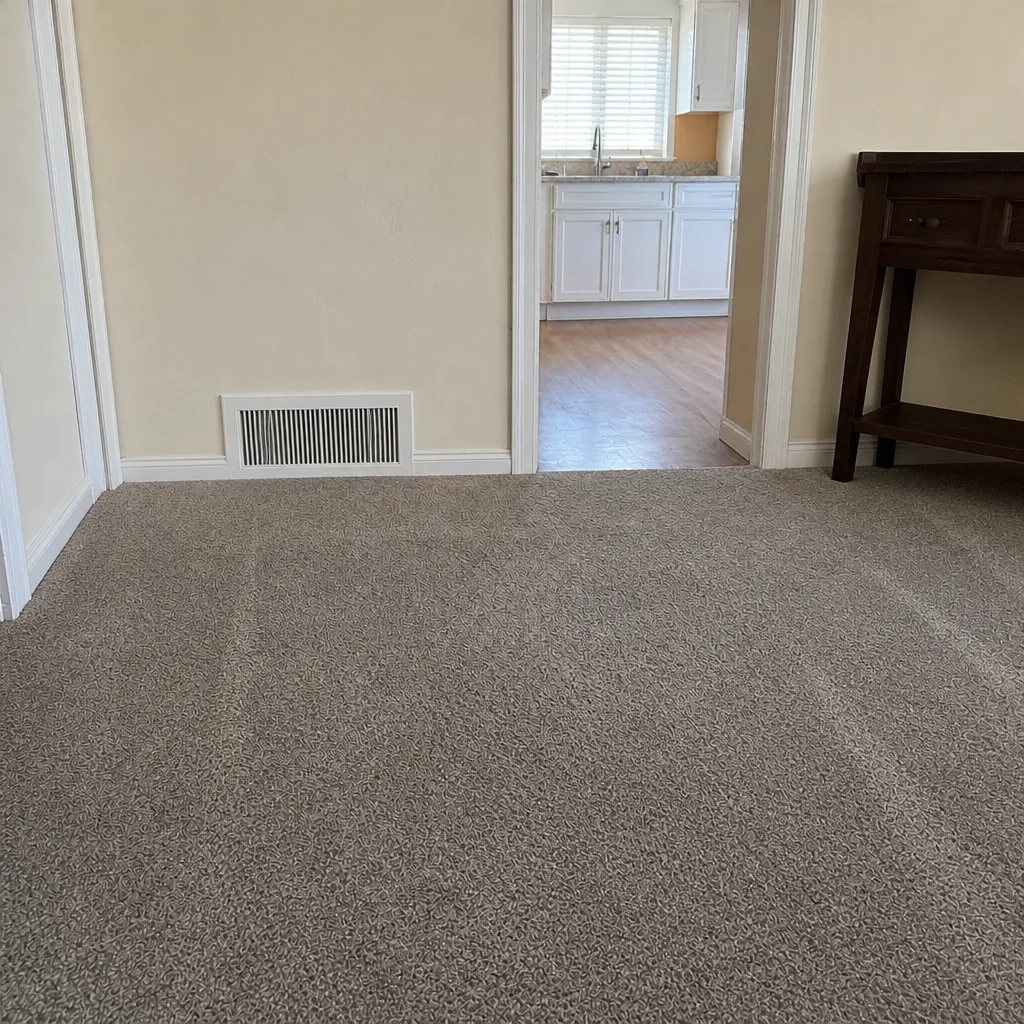 After
When to Call a Professional
Call us when the visual checklist turns up debris at a register face, a persistent odor, uneven airflow, or a filter that keeps clogging faster than it used to. Call when the run-hour log points to a cleaning interval you’ve crossed. And call for the dryer vent, because a packed vent is a safety issue rather than a maintenance item. Lafayette Air Duct Cleaning Pros offers free estimates in Lafayette. Call (877) 792-6649 and we’ll walk through what you’re seeing. We answer 24/7. Fast dispatch from 7am to 7pm, Sunday through Friday. We’re closed on Saturday.
Frequently Asked Questions
It depends on how many hours your system runs and what your home sees. In Lafayette, a home with heavy run hours through a windy spring and a smoky summer will need attention sooner than a home that runs lightly. Track filters and register dust with the log above; when it shows consistent loading, schedule a professional cleaning.
The highest rating your blower can move air through without losing airflow, which varies by system. Many homes work well in the mid range of pleated media. Homes with long flex runs in newer construction need more caution. If you have Aprilaire or Honeywell filtration, use the filter rated for that cabinet.
A low quote usually means less equipment, less time, or a smaller scope: often a vacuum at a few registers rather than a full-system cleaning with contact-vacuum tools. The gap shows up in what gets extracted. Ask what equipment is used and whether the price is for the whole system. With us, it’s one flat price per system agreed before work starts, and you get before-and-after photos of your own ducts.
Ask for before-and-after photos of your own ducts, not generic images. A proper cleaning also lets you compare register airflow and dust levels before and after. Our technicians photograph the system before and after each job.
Yes, and it belongs on the same checklist. The dryer vent is a separate duct run and a fire-safety concern. Our dryer vent cleaning service address it as a named specialty, separate from the air-side ducts.
We use Rotobrush contact-vacuum systems, Nikro HVAC cleaning units, and Abatement Technologies negative-air machines on every job. Those are professional and remediation-grade tools, not consumer equipment, which is what allows a checklist item like “seam leak found during inspection” to be fixed on the same visit through Duct Repair & Sealing.
The Bottom Line
A duct maintenance checklist that ignores Lafayette’s wind, smoke, dry winters, and mix of construction eras is just a calendar with chores on it. The useful version times filter checks to the seasons, picks MERV based on your blower rather than the shelf, uses no-tools inspection at registers and returns, and logs cleaning intervals by run hours. It also knows where to stop: odors, visible debris, uneven airflow, and dryer vent loading all call for a professional, not a workaround. Write the log, do the checklist, and let the history guide the professional visit.
Call (877) 792-6649 for a free estimate. We answer 24/7. Fast dispatch from 7am to 7pm, Sunday through Friday. We’re closed Saturday.
Written by the team at Lafayette Air Duct Cleaning Pros.