
Last updated November 25, 2026
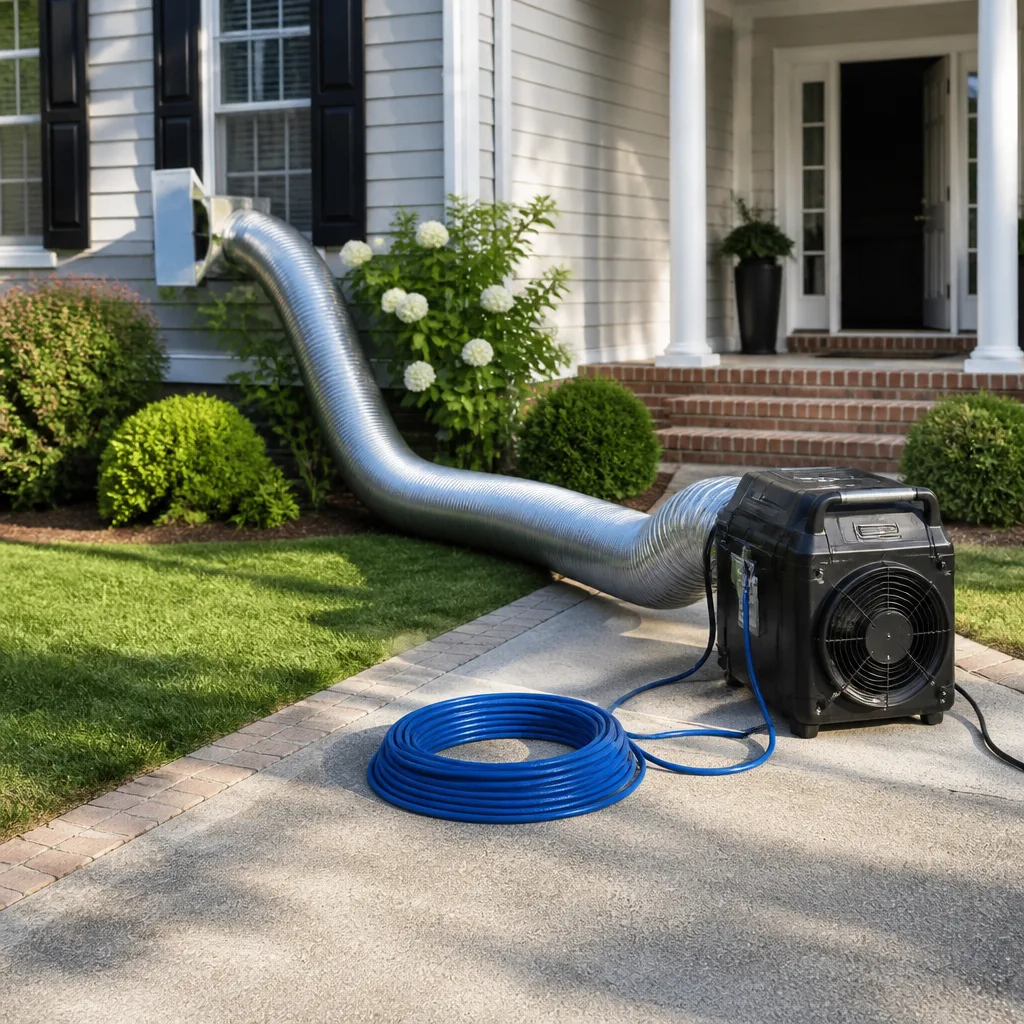 Whole-home duct cleaning
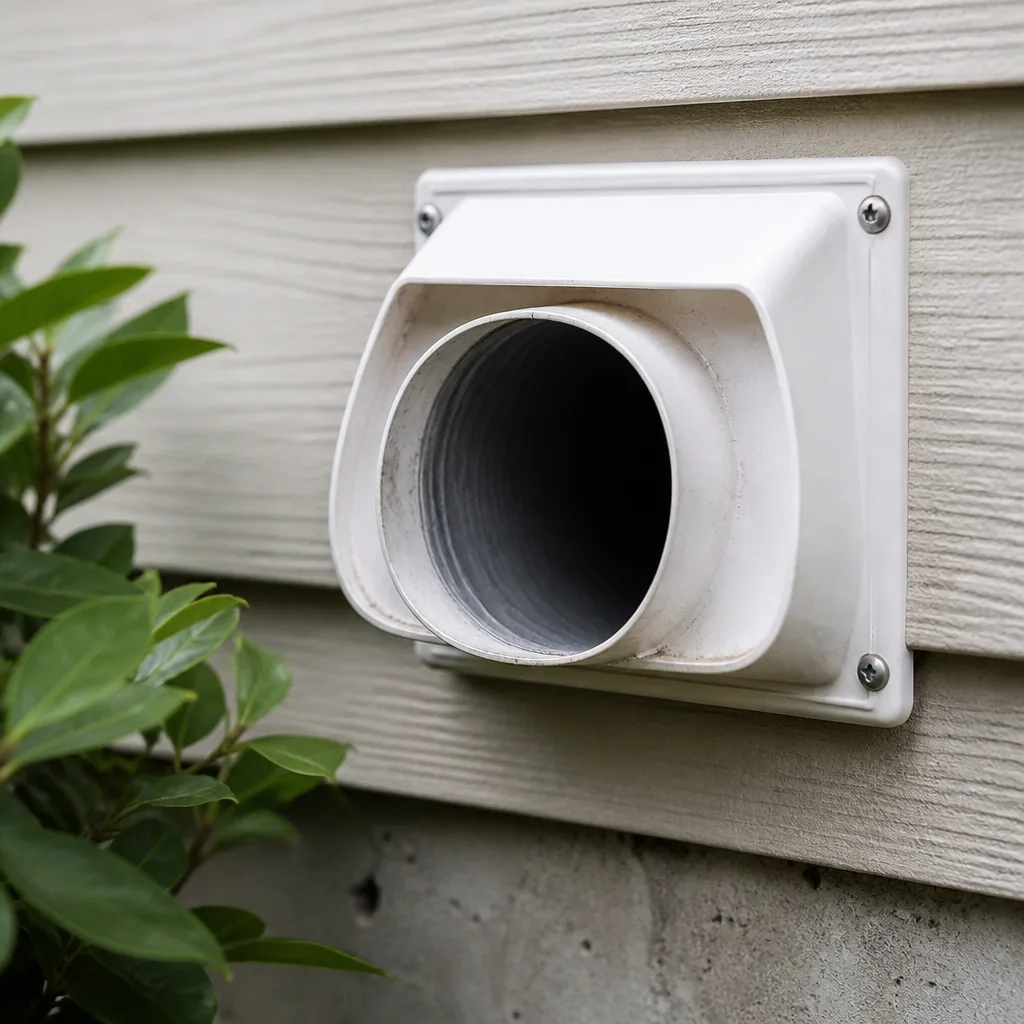 Dryer vent cleaning
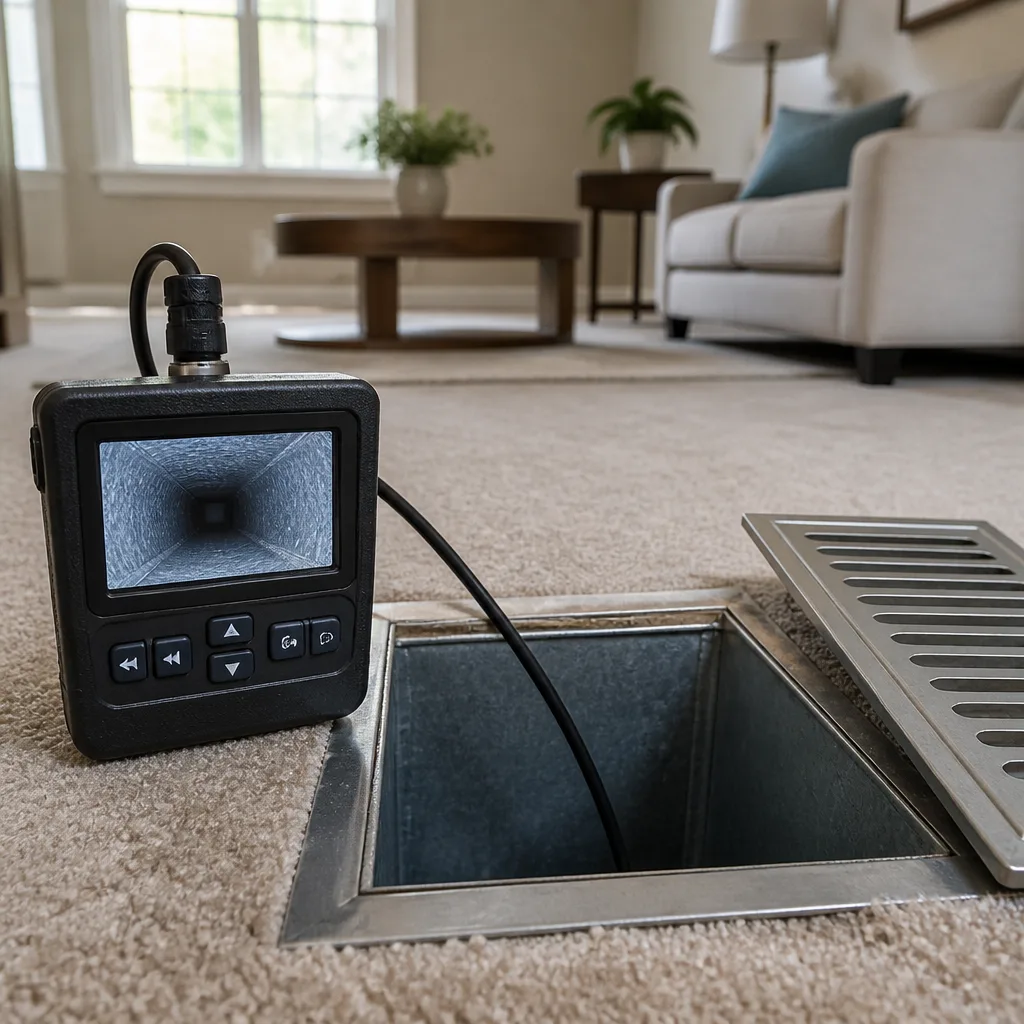 Camera inspection
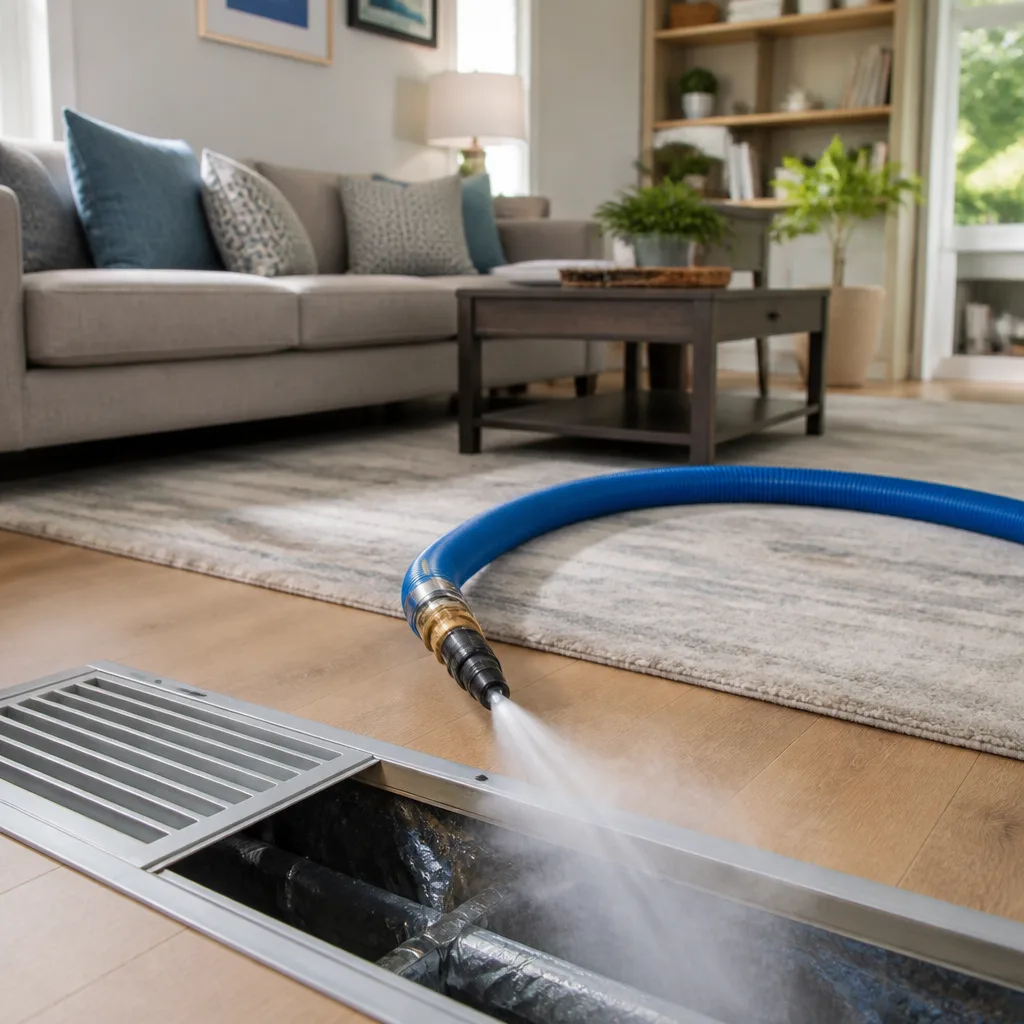 Sanitizing & deodorizing
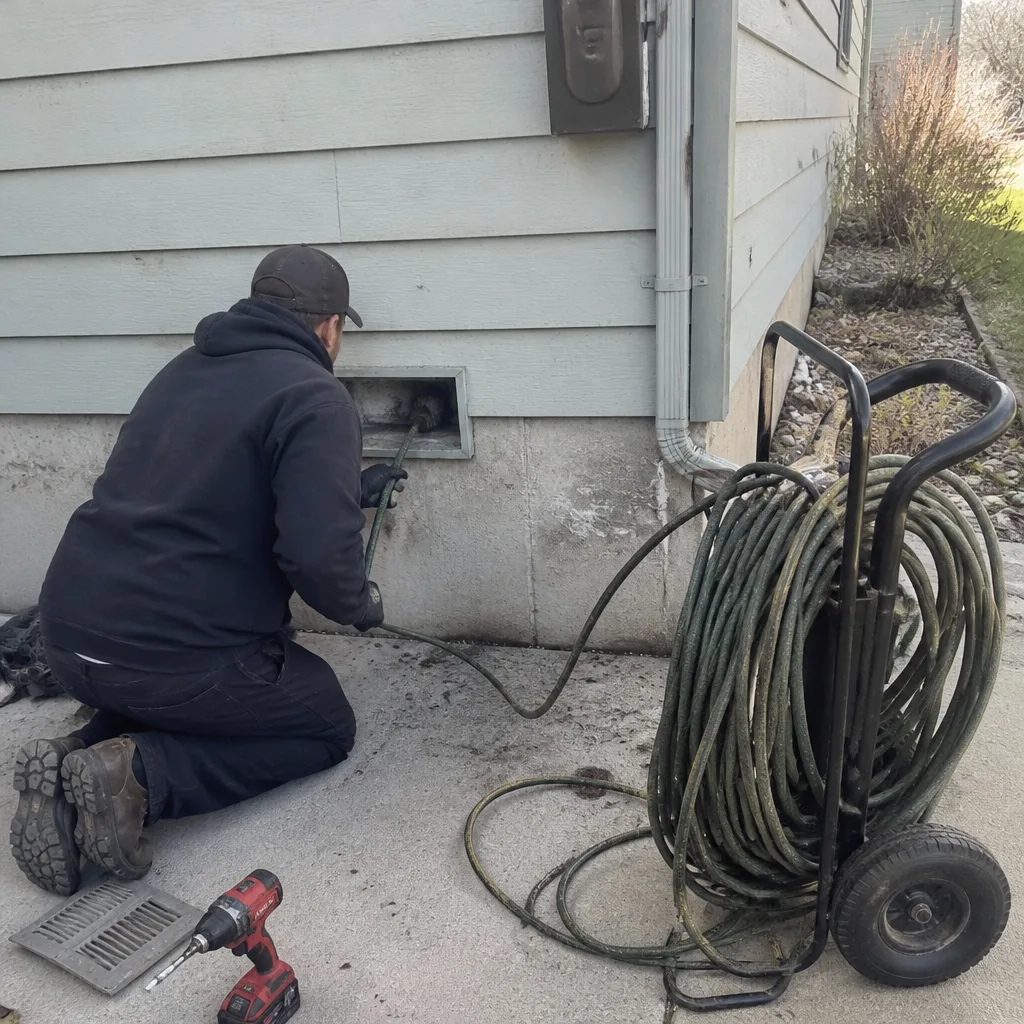
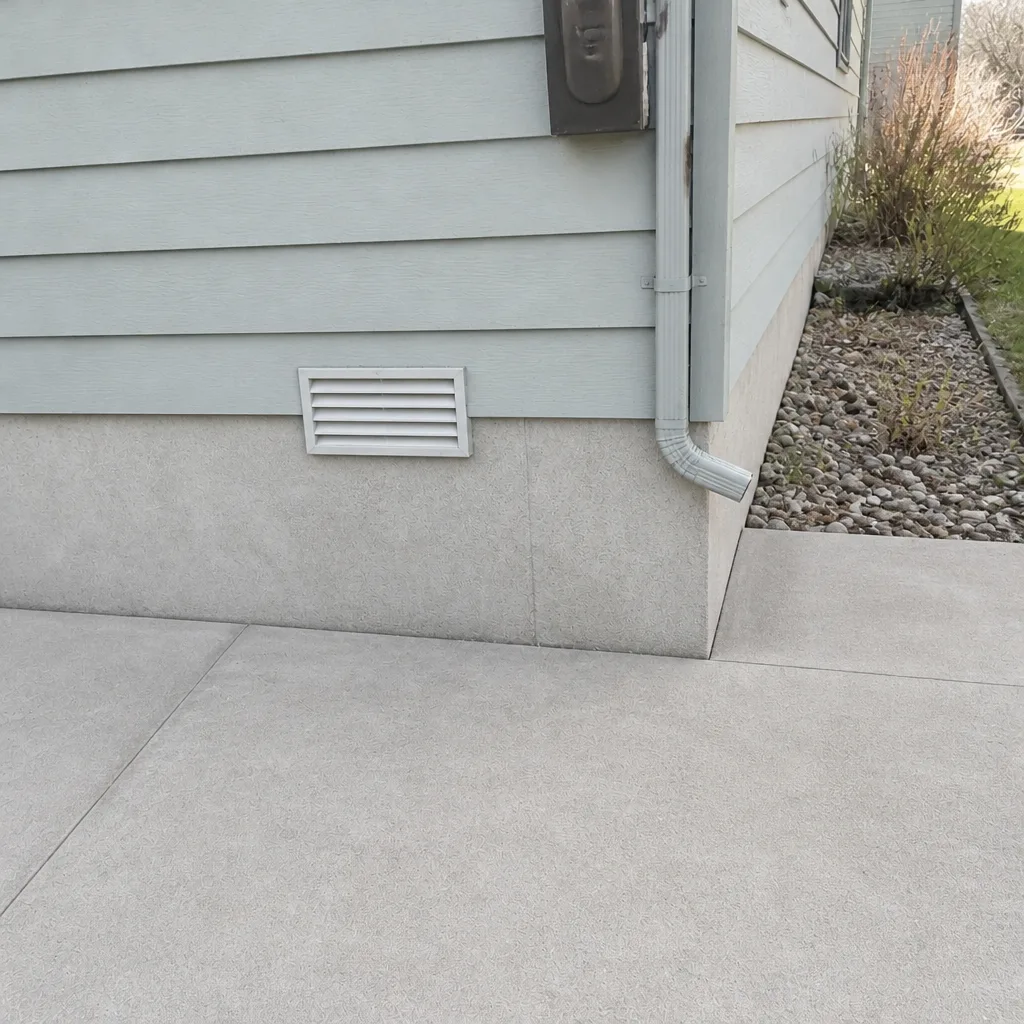
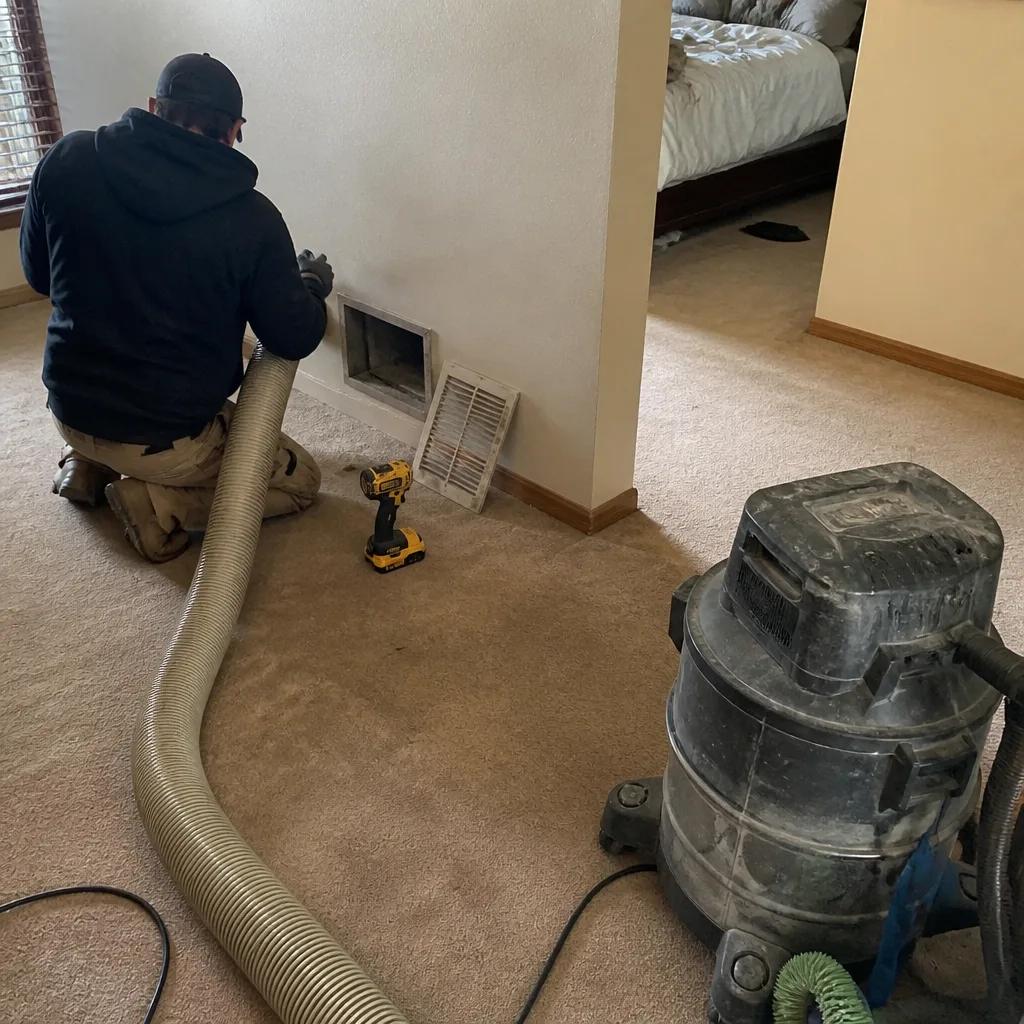
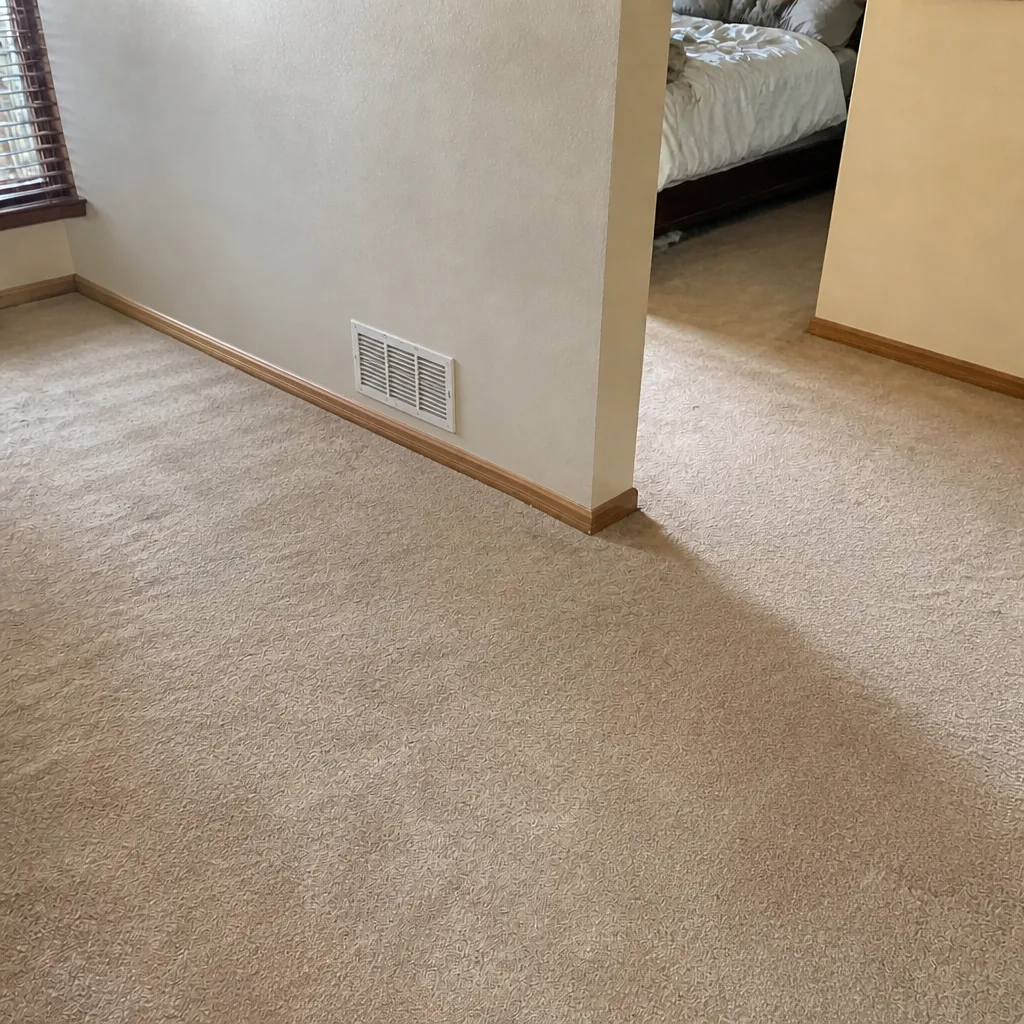
Whole-system duct and dryer vent check with before-and-after photos - you see exactly what came out of your vents
That "$99 whole-house special" is a bait ad - the real number appears once they are in your hallway, or the "clean" is a shop-vac at the register. We photograph the inside of your ducts before and after instead.
DIY vs Professional Air Duct Cleaning: The Lafayette Homeowner’s Decision Guide
Most homeowners assume the DIY-versus-professional question comes down to effort and money. It doesn’t. It comes down to physics, specifically negative pressure, and that single variable decides whether dust leaves your duct system or just gets stirred around inside it. A shop vac pulls 1 to 2 inches of water column. A professional negative air machine pulls 10 to 12. That gap isn’t a spec sheet curiosity – it’s the difference between a clean system and a contaminated house. Below, we break down exactly what consumer tools can and can’t do, what you can legitimately handle yourself, the real numbers in the Lafayette market, and how to decide whether your ducts even need a full cleaning.
Quick Answer
For most Lafayette homes with a genuine contamination problem, professional air duct cleaning using source-removal equipment is the correct choice, because consumer-grade vacuums cannot generate the negative pressure required to extract debris from the full length of a duct run. DIY is genuinely useful for register cleaning, return grille washing, filter upgrades, and dryer vent maintenance. If your ducts are heavily soiled or you suspect mold, a professional job is the only method that actually removes the source.
Styles & brands we work with
- Whole-home duct cleaning
- Dryer vent cleaning
- Camera inspection
- Sanitizing & deodorizing
Table of Contents
- Why Duct Cleaning Is a Physics Problem, Not an Effort Problem
- What You Can Honestly Do Yourself
- When DIY Makes the Contamination Worse
- The Real Cost Comparison in Lafayette
- How to Know If You Even Need a Full Cleaning
- How to Evaluate a Professional Quote in Lafayette
- What Colorado’s Climate and Housing Stock Do to Your Ducts
- Common Mistakes to Avoid
- When to Call a Professional
- Frequently Asked Questions
Why Duct Cleaning Is a Physics Problem, Not an Effort Problem
Here’s the point almost every DIY article skips: a duct system is a long, sealed network of rigid and flexible pipe. To clean it, you have to pull air (and everything riding in that air) toward a collection point while simultaneously agitating the surfaces inside. Suction volume, measured in cubic feet per minute, sounds impressive on a vacuum box. It’s the wrong number. The number that matters is static pressure, expressed in inches of water column, because that’s the force moving debris through the length of the duct and into a filter bag.
A typical household shop vac generates 1 to 2 inches of water column. That’s enough to yank a few ounces of sawdust off a floor. It is not enough to overcome the friction losses inside 30 to 50 feet of duct run, around ells, past dampers, and out through a boot at the far end. A commercial negative air machine – the kind Abatement Technologies builds for mold abatement and restoration work – produces roughly 10 to 12 inches. That’s five to ten times the pressure differential, and it’s what allows source removal: the physical extraction of the contamination itself rather than a light blow-around that lifts dust into the airstream and drops it twenty feet later.
- Contact vacuum (Rotobrush): a rotating brush head attached to a high-pressure vacuum line that scrubs the duct interior while extraction happens at the same spot
- Negative air machine: creates controlled vacuum across the entire system so loose debris moves toward the collection point, not into living space
- HEPA filtration: captures particles at 0.3 microns, so what gets pulled out stays inside the equipment, not on your sofa
- Compressed air agitation: loosens debris from duct walls so the vacuum can actually lift it
Consumer vacuum attachments do exist. Most of them are 8 to 12 feet long and can’t reach the middle of a run, let alone turn a corner. When we open a duct system after a homeowner has tried the shop-vac approach, we often find the contamination redistributed – heavier deposits moved toward the registers, lighter dust spread evenly across surfaces that were previously only partially soiled. That’s the physics at work. Suction without pressure differential moves particles; it doesn’t remove them.
What You Can Honestly Do Yourself
Plenty of duct-system upkeep is fair game for a careful homeowner, and doing it well genuinely extends the life of the system. We’d rather tell you what’s safe than pretend everything requires a service call. Our technicians have up to 12 years of experience, and the pattern they see across Lafayette homes is that the simple maintenance items get skipped while the complicated ones get attempted. Flip that around.
- Wash the return grilles. Pop them off, soak them in warm soapy water, rinse, dry, reinstall. Return grilles catch the bulk of what a system pulls in, and cleaning them monthly during allergy season reduces what reaches the filters.
- Clean the supply registers. A damp cloth and a soft brush handle surface dust build-up around the vanes. Don’t spray cleaner into the duct opening – that just sends moisture downstream.
- Replace filters on schedule. A 1-inch filter typically needs changing every 30 to 90 days depending on pets and occupancy. A thicker media filter or a whole-home system from Aprilaire or Honeywell may run longer per the manufacturer’s spec. Set a reminder; this single habit matters more than most duct cleanings.
- Maintain the dryer vent. Pull the flexible connector behind the dryer, clear the lint trap cavity, and inspect the exterior termination for visible lint build-up. This is a fire-safety task, not a comfort task – the National Fire Protection Association (NFPA) identifies failure to clean as the leading contributing factor in residential dryer fires.
- Keep the immediate duct opening accessible. If your registers sit behind heavy furniture or rugs, reposition. Restricted supply airflow stresses the blower and raises static pressure in the trunk line.
What falls outside DIY territory: the interior of a duct run, the plenum, the evaporator coil face, and the flexible duct sections in the attic or crawlspace. Those need the pressure and tooling we described above. Straightforward dryer vent cleaning of the full vent run, from the back of the appliance to the exterior termination, is a professional job too – not because it’s complex, but because lint compressed along the interior of a long rigid run is exactly what consumer snakes miss.
When DIY Makes the Contamination Worse
This is the scenario that gets underplayed in most guides. A DIY attempt isn’t neutral. In the wrong conditions, it actively degrades indoor air quality, and the fix afterward costs more than a straightforward cleaning would have.
The core mechanism: when you disturb settled debris inside a duct without simultaneously extracting it under strong negative pressure, you suspend particles in the airstream. The blower then distributes them evenly across every room. A homeowner who rents a shop vac and a duct brush, runs it down the register opening, and calls it done has just converted a localized soil problem into an airborne one. Fine particulates at 0.3 to 10 microns – the size that reaches deep lung tissue – are exactly what that approach liberates.
- When the system has visible mold growth: agitating mold without HEPA containment spreads spores through the home. The industry standard for handling this is negative-air containment, which is what our Abatement Technologies machines are built for.
- When there’s pest activity: droppings, nesting material, or a carcass create a biohazard. Agitating it without proper PPE and containment is a genuine health risk.
- When the ducts are flexible rather than rigid: cutting or aggressively scrubbing flexible duct liner tears the inner membrane. Once torn, the duct must be replaced, not cleaned.
- When there’s significant build-up from construction or renovation: drywall dust pulls moisture from the air, cakes onto duct surfaces, and requires mechanical agitation to break free – not a shop vac.
- When the return side has a compromised seal: a leaky return pulls air from the crawlspace or wall cavity, and blowing a brush through it just redistributes whatever is being drawn in. This is why Lafayette Air Duct Cleaning Pros treats sealing as part of the same job, not a separate service.
If you’re unsure which category your home falls into, the honest answer is: don’t guess. A professional inspection costs nothing, and it tells you whether a DIY filter change is enough or whether the ducts need real extraction work.
The Real Cost Comparison in Lafayette
DIY cost comparisons usually miss the two biggest line items: time and equipment rental, plus the risk of a partial result. A rented commercial-grade negative air machine from a tool rental yard in Boulder or Denver typically runs $80 to $150 per day, and you’ll need to source duct-specific brush attachments separately. Add the cost of a HEPA vacuum capable of 0.3-micron filtration, and the total for a genuine attempt runs $200 to $400 in equipment before the first foot of duct is touched. Typical professional air duct cleaning in the Lafayette market ranges $300 to $700 for a standard residential system, depending on the number of vents, system size, and access.
| Item | DIY (estimated) | Professional (estimated) |
|---|---|---|
| Equipment cost | $80 – $150 (rental, if sourced) | Included in service price |
| HEPA vacuum add-on | $150 – $250 (purchase) | Included |
| Duct brush attachments | $40 – $80 | Included |
| Time commitment | 4 – 8 hours (partial result) | 2 – 4 hours on-site |
| Result | Often incomplete; risk of redistribution | Full source removal, verified before-and-after |
| Repair & sealing capability | Not available | Included as an in-house service when needed |
| Typical total | $270 – $480 + risk of redo | $300 – $700, one flat price per system |
Run the math honestly and the DIY route is not meaningfully cheaper for a system that actually needs cleaning. It’s only cheaper if the system doesn’t need cleaning at all – and in that case, neither path is the right one. Filter upgrades and register maintenance are the better spend.
If you want the estimate side of the equation nailed down before you commit, call (877) 792-6649. Estimates are free, the price is set per job by the written estimate, and the local pro is licensed and insured as their state requires.
How to Know If You Even Need a Full Cleaning
Not every duct system needs a full clean. That’s the first thing a reputable professional should tell you on the phone, before any quote is given. The EPA’s general guidance is that duct cleaning is warranted when there’s substantial visible mold growth, vermin infestation, or heavy particulate build-up – not on a fixed calendar schedule. In our experience across Lafayette, the far more common problem is a system that’s fine but under-filtered, and the fix is a filter upgrade, not a duct truck.
Work through these checks before calling anyone:
- Pop a register and look inside with a flashlight. A thin film of dust is normal. Visible matting, caked build-up, or an obvious color change on the duct lining is not.
- Check the filter slot. If the filter is bypassing (air moving around the edges rather than through the media), the ducts are absorbing what the filter should have caught.
- Sniff near the supply registers when the system runs. A persistent musty smell suggests moisture in the system, which is a professional matter.
- Watch for dust puffs. A burst of visible dust when the blower starts points to debris in the supply trunk.
- Note allergy or asthma patterns. Symptoms that worsen when you’re home and improve when you’re away, in a house with a known dusty system, are a reason to inspect.
- Check the return intake with a tissue. Poor suction at the return is a sign of a leak or blockage – a professional can determine which.
If your answer to most of these is “looks normal,” improved filtration is the better move. A whole-home media cabinet from Aprilaire or a Honeywell air cleaner handles allergen and fine-particulate loads far more reliably than a monthly duct cleaning would. This is exactly the sort of judgment call that separates thorough professionals from coupon-driven bait-and-switch operators – not every call needs to produce a service.
How to Evaluate a Professional Quote in Lafayette
A professional quote in Lafayette should be specific, itemized by scope, and tied to a single written estimate for the whole system. It should tell you what equipment will be used, how long the job takes, and whether the technician will photograph before-and-after. If any of those is missing, that’s your answer.
- Ask what equipment will be on site. Rotobrush contact-vacuum units, Nikro cleaning systems, and Abatement Technologies negative-air machines are examples of what a professional system should include. Don’t accept “we have a big vacuum.”
- Ask about negative pressure. A real answer will describe how the system is put under negative pressure during cleaning. A vague one won’t.
- Confirm before-and-after documentation. Photos of your own ducts, not stock imagery, taken during the job.
- Ask whether duct repair and sealing is in-house. If a company has to subcontract that, you’re looking at a second appointment, a second estimate, and a second set of judgment calls.
- Ask what the flat price includes. One flat price per system agreed before work starts is the only quote structure that protects you from per-vent surprises.
- Eliminate anything suspiciously cheap. A quote that undercuts everyone else is a loss leader; the invoice grows once the technician is in the door. That reputation is what makes the whole category difficult, and it’s the reason one flat rate matters.
Our air duct cleaning jobs are quoted this way every time: one number for the whole system, before any work begins, with the equipment named. That structure is the single clearest signal of a legitimate operator in this market.
What Colorado’s Climate and Housing Stock Do to Your Ducts
Lafayette sits in a semi-arid climate with cold winters, dry summers, and a spring-fall pattern of high winds that carries fine dust from the open plains and the foothills. That dust finds its way into every return the system pulls from, which is one reason Lafayette duct systems tend to load up faster than systems in humid regions where vegetation keeps ground cover intact year-round.
Housing stock matters too. The older neighborhoods in Lafayette – and the renovation work in the newer subdivisions – tend to produce two different duct problems. Older homes often have undersized return systems and less sealed ductwork, so whatever dust is pulled in gets distributed rather than filtered. Newer builds and remodels generate construction dust that finds its way into newly installed runs before the drywall is even painted, and it settles hard. In both cases, a professional cleaning schedule should be built around building events (a remodel, a pest problem, a visible mold find), not a calendar.
Winter is the other consideration. Colorado heating runs long, and every heat cycle pushes air through the same ductwork. A return that’s slowly pulling dust and drywall particulate from an unsealed crawlspace or attic chase contributes to the load all season. The HVAC cleaning side of the job – the components that actually push air, including the blower and the coil face – matters as much as the duct interior, and it’s the service most DIY approaches can’t touch at all.
Common Mistakes to Avoid
- Renting a shop vac and calling it duct cleaning. It creates the illusion of progress while redistributing contamination. Without negative pressure, the debris you lift lands on surfaces you can’t reach.
- Skipping the return side. Supply registers get the attention because they’re visible. The return grille and its trunk line are where the bulk of the load settles.
- Accepting a per-vent quote over the phone. A per-vent price is how a low teaser turns into a big invoice. Demand a whole-system estimate based on actual system size.
- Not asking about duct repair. If the inspection finds a torn flex duct, an unsealed joint, or a disconnected run, you want that fixed by the same team. A cleaning contractor who can’t seal the system leaves the efficiency loss in place.
- Ignoring the dryer vent. It’s not a comfort item. NFPA data identifies failure to clean as the leading contributing factor in residential dryer fires, and it’s the easiest fire-safety gap to close in a Lafayette home.
- Buying a cheap filter and calling it a solution. A 1-inch fiberglass filter catches almost nothing under 10 microns. A properly sized thick media filter or an Aprilaire-compatible cabinet is a real functional upgrade.
- Choosing a provider solely on the price on a mailer. The cheapest quote on a coupon is the entry point for the bait-and-switch pattern this category is known for. Before-and-after photos and a written flat price are the reliable signals.
When to Call a Professional
Call a professional when the system shows any of the signs that source removal is required: visible mold growth inside a duct, evidence of pest infestation, heavy build-up visible through a register, persistent musty odor, dust puffs when the blower starts, or a documented health concern tied to indoor air quality. Call if the system has never been inspected and you’re in an older Lafayette home with a suspect return. Call if a recent remodel or pest event left contamination behind. And call if you’ve already attempted a DIY run and it made things worse – redistribution is fixable, but only with the right equipment.
Lafayette Air Duct Cleaning Pros offers free estimates in Lafayette – call (877) 792-6649. We answer 24/7. Fast dispatch from 7am to 7pm, Sunday through Friday. Duct repair and sealing is handled in-house during the same job when the inspection finds it, so a leaky return doesn’t sit until a second crew shows up.
Frequently Asked Questions
No. A shop vac generates roughly 1 to 2 inches of water column in negative pressure, while a professional negative air machine generates about 10 to 12 inches. That gap means a shop vac lifts surface dust but cannot pull contamination from the full length of a duct run. Call (877) 792-6649 for a free estimate on a proper professional cleaning.
Typical residential air duct cleaning in the Lafayette market runs $300 to $700, depending on the number of vents, system size, and access. That’s one flat price per system, agreed before any work starts – not a per-vent rate. Call (877) 792-6649 for an exact quote, free of charge.
Low quotes are almost always entry pricing for a per-vent or add-on-heavy invoice that grows once the technician arrives. The reliable signals of a fair quote are one flat price per system, named professional equipment, before-and-after photos of your own ducts, and no per-vent charge. If you’re comparing multiples and can’t tell the difference, call (877) 792-6649 and we’ll explain our scope line by line.
Before-and-after photos of your own duct system are the standard verification. A professional will document interior condition of the supply and return sides as they work, not hand you a stock brochure photo. Ask for that before booking. If a provider won’t commit to it, call (877) 792-6649 – ours always do.
There’s no fixed calendar interval; cleaning is warranted when there’s visible build-up, mold, pest activity, or heavy dust accumulation from a remodel or long-term occupancy. Many Lafayette homes go years without a cleaning because filtration is adequate. Call (877) 792-6649 for a free inspection to determine if yours is one of them.
You can clear the immediate lint trap cavity and the flexible connector behind the dryer, but the full rigid vent run needs professional equipment to clear compressed lint along its length. Failure to clean is the leading contributing factor in residential dryer fires, per NFPA. Call (877) 792-6649 – dryer vent cleaning is one of our five core services, alongside air duct, HVAC, sanitizing, and duct repair.
A professional system should include a contact-vacuum unit (Rotobrush), a commercial HVAC cleaning unit (Nikro), and negative-air containment (Abatement Technologies). HEPA filtration at 0.3 microns throughout the job is standard. If the quote doesn’t name the equipment, ask. Call (877) 792-6649 if you want a straight answer on what we bring to a Lafayette job.
Cleaning helps when the source of the allergen load is inside the system – visible mold, pest debris, or heavy dust build-up – and it helps less when the source is filtration gaps or outdoor pollen infiltrating the return. The right answer depends on inspection. Call (877) 792-6649 to book a free estimate that tells you which situation you’re in.
The Bottom Line
The DIY-versus-professional decision isn’t about effort. It’s about whether consumer-grade equipment can generate the negative pressure that source removal requires, and in most Lafayette homes with a real contamination problem, it can’t. DIY is the right move for register maintenance, filter upgrades, and dryer vent basics. For the interior of a duct system, for mold or pest findings, and for anything that touches the return side or the HVAC itself, the professional route is the correct one. One flat price per system, named professional equipment, before-and-after photos, and a written estimate are the signals of a legitimate job. Anything less and you’re paying for the illusion of cleaning.
Call (877) 792-6649 for a free estimate. We answer 24/7. Fast dispatch from 7am to 7pm, Sunday through Friday. Our technicians have up to 12 years of experience, and we use the same professional-grade equipment on every job – Rotobrush, Nikro, Abatement Technologies – with Honeywell and Aprilaire-compatible air quality and filtration systems supported. Duct repair and sealing is handled in-house during the same engagement, so the problems found during inspection get resolved without a second appointment. See our Lafayette Air Duct Cleaning Pros page for the full range of what we cover across the full air-quality stack.
Written by the team at Lafayette Air Duct Cleaning Pros.
See the difference
 Before
 After
 Before
 After
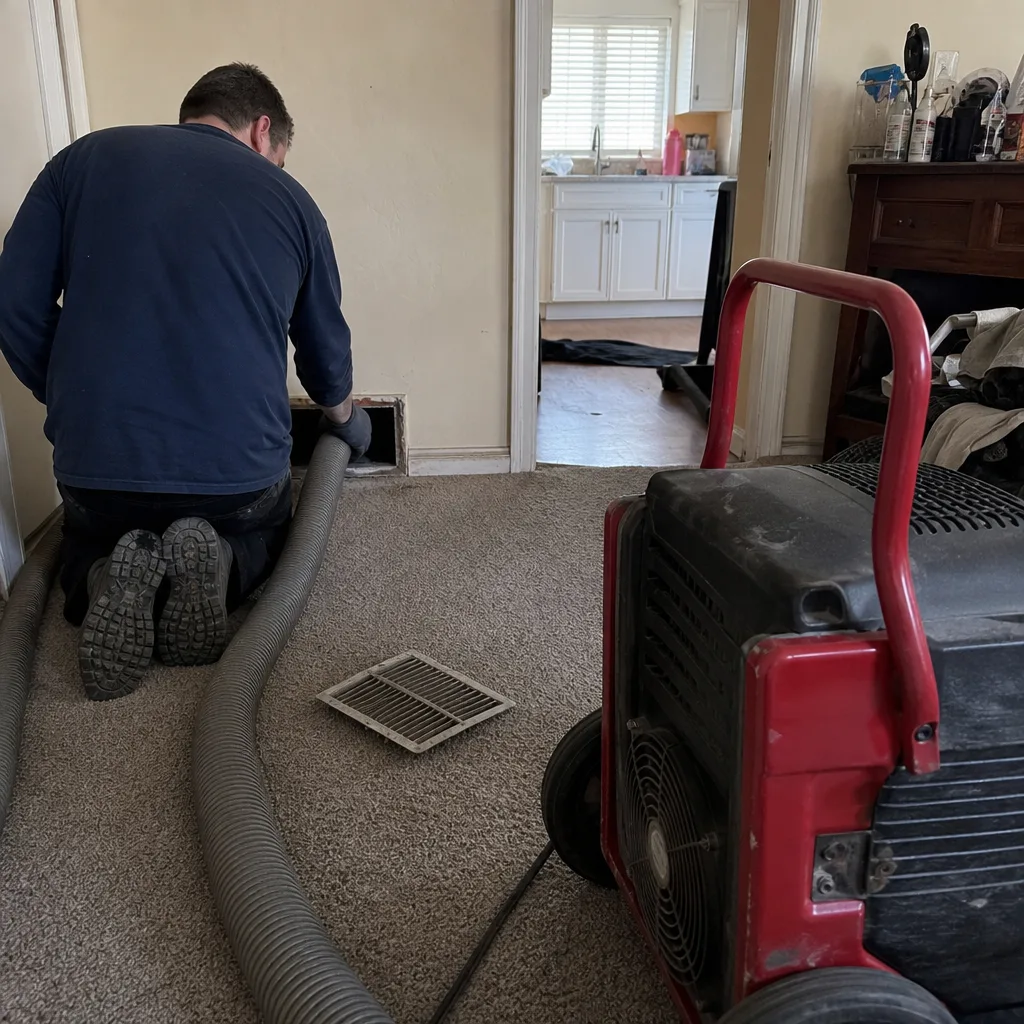 Before
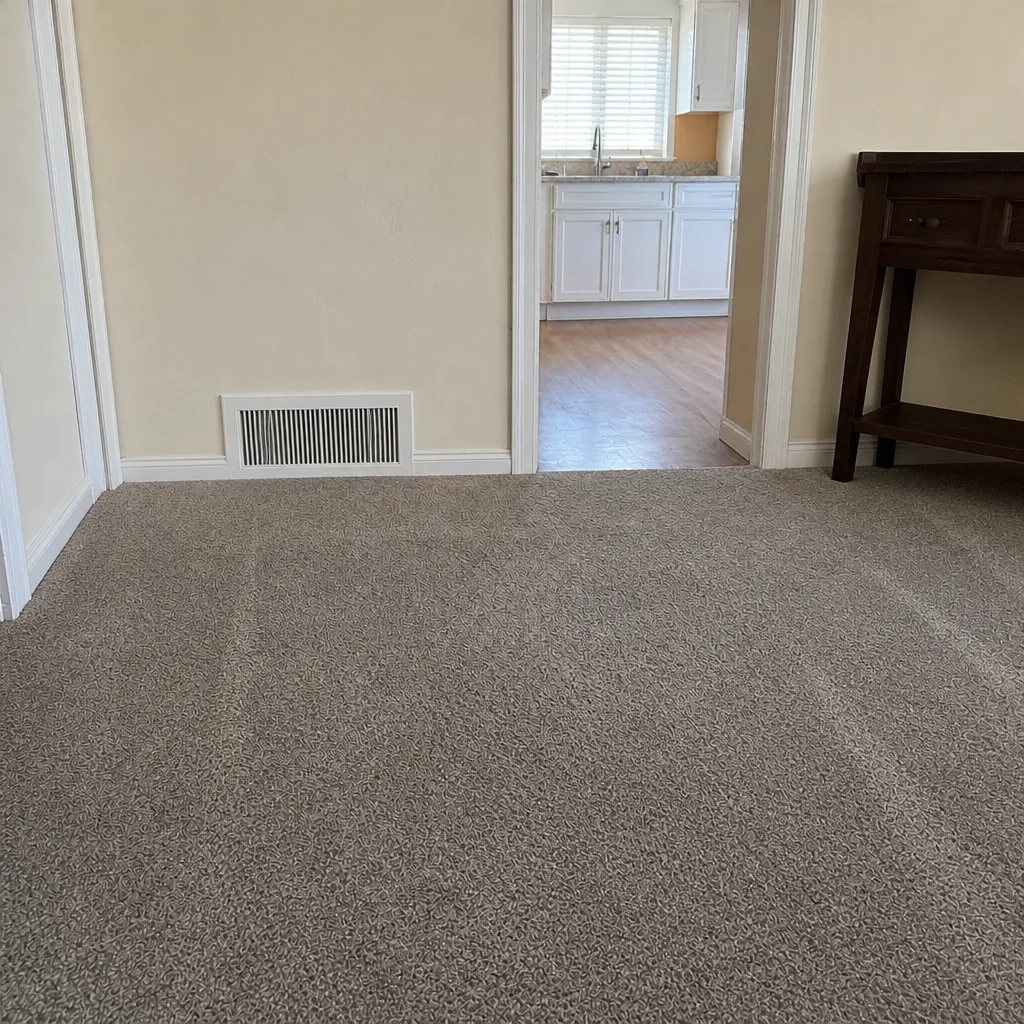 After